
One thing about baking is it will always be a debate with which ingredients is best and sour cream vs Greek yogurt for baking is always a popular question! If you have ever stood in your kitchen wondering whether sour cream or Greek yogurt is better for baking, the short answer is this: both work well, but they create slightly different results. Sour cream usually gives baked goods a richer flavor and softer crumb because it has more fat, while Greek yogurt is a lighter, higher-protein option that still adds moisture and tang. The best choice depends on whether you want maximum richness, a lighter texture, or an easy substitute for what you already have on hand.
Quick Answer
For most cakes, muffins, quick breads, and coffee cakes, sour cream delivers a richer taste and more tender crumb because of its higher fat content. Greek yogurt is usually the better choice if you want a slightly lighter bake with more protein and fewer calories. In many baking recipes, you can swap one for the other in a 1:1 ratio, especially if you use full-fat Greek yogurt, but the texture and richness may change a little.
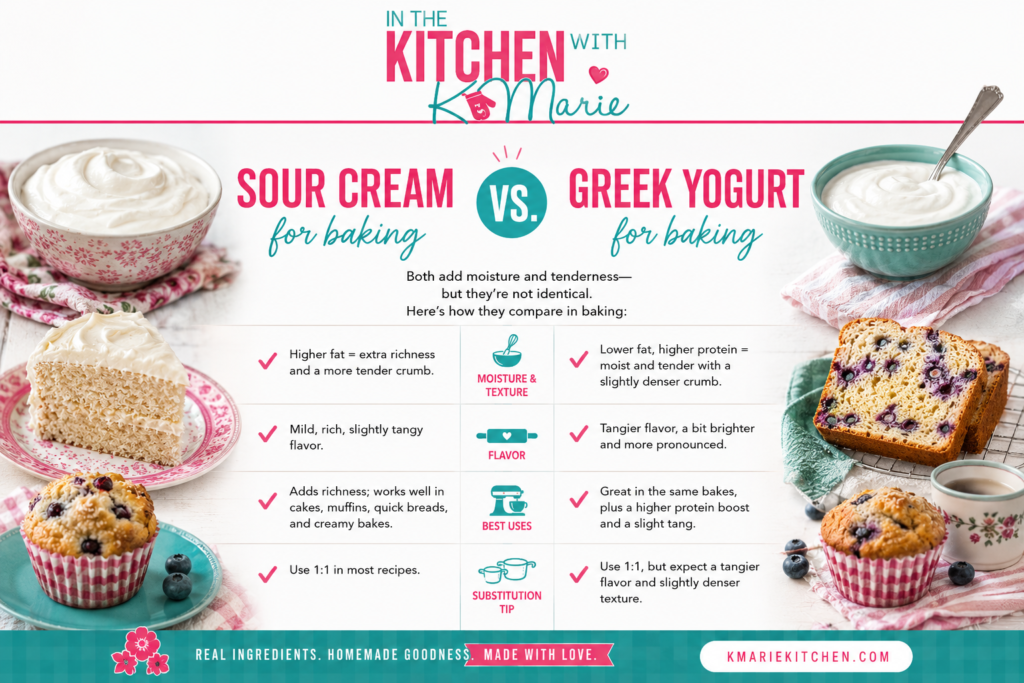
Key Differences Between Sour Cream and Greek Yogurt in Baking
The biggest differences come down to fat, protein, texture, and tanginess. Sour cream is made from cultured cream, so it is higher in fat and usually gives baked goods a richer mouthfeel and softer texture. Greek yogurt is strained, which makes it thick and high in protein, but often lower in fat depending on the variety. Both ingredients are acidic enough to help tenderize batter and react with baking soda, which is why both are popular in baking. However, Greek yogurt can make some recipes a bit denser or tangier, while sour cream usually creates a more classic, indulgent result. Sources comparing these ingredients consistently note that sour cream tends to contain around 18 to 20 percent fat, while Greek yogurt varies widely by type and is typically much higher in protein and lower in calories.
Sour Cream vs Greek Yogurt: Side-by-Side Comparison
| Category | Sour Cream | Greek Yogurt |
| Texture | Silky, rich, creamy | Thick, dense, creamy |
| Fat content | Usually higher | Usually lower, varies by type |
| Protein | Lower | Higher |
| Flavor | Mild tang with buttery richness | Tangier and fresher taste |
| Effect in baking | Creates tender, rich crumb | Adds moisture with a lighter feel |
| Best for | Coffee cake, pound cake, cheesecake, rich muffins | Muffins, quick breads, lighter cakes, healthier swaps |
| Substitution ratio | 1:1 in many recipes | 1:1 in many recipes, best with full-fat plain Greek yogurt |
When Sour Cream Is Better for Baking
Sour cream is usually the better choice when richness and tenderness matter most. It shines in pound cakes, coffee cakes, cheesecake, banana bread, brownies, and muffins where you want a soft crumb and a fuller dairy flavor. Because it has more fat, it helps create a more luxurious texture and can make baked goods feel especially moist without making them taste overly tangy. If you are baking for flavor first and nutrition second, sour cream is often the winner.
When Greek Yogurt Is Better for Baking
Greek yogurt is a strong option when you want to lighten up a recipe without losing moisture. It works especially well in muffins, pancakes, quick breads, snack cakes, and other everyday bakes where a slight change in richness is not a dealbreaker. Plain full-fat Greek yogurt usually performs best because nonfat versions can be more tangy and may lead to a drier or slightly rubbery texture. If your goal is to add protein and reduce fat while keeping a baked good soft and tender, Greek yogurt is often the smarter substitute.
Can You Substitute Greek Yogurt for Sour Cream in Baking?
Yes, you can usually substitute Greek yogurt for sour cream in baking at a 1:1 ratio. This works best in cakes, muffins, loaf breads, and cupcakes. To get the closest result, use plain Greek yogurt and choose a full-fat or at least 2 percent variety if possible. If a recipe depends heavily on sour cream for richness, the finished bake may be slightly less tender and a bit more tangy when you use Greek yogurt instead. Going the other direction, sour cream can also replace Greek yogurt for a richer result. In either case, avoid sweetened yogurt and be cautious with very low-fat versions, which can change the crumb.
Pros and Cons of Sour Cream vs Greek Yogurt
- Sour cream pros: richer flavor, softer crumb, classic baking ingredient, excellent moisture.
- Sour cream cons: higher in fat and calories, lower in protein.
- Greek yogurt pros: higher in protein, usually lower in fat and calories, easy 1:1 substitute in many recipes.
- Greek yogurt cons: can taste tangier, may create a denser texture, nonfat versions may bake less smoothly.

Frequently Asked Questions
Does Greek yogurt make baked goods dry?
No, not usually, but very low-fat or nonfat Greek yogurt can sometimes produce a slightly drier texture than sour cream.
Is sour cream or Greek yogurt better for cake?
Sour cream is often better for a richer, more tender cake, while Greek yogurt is better if you want a lighter option with more protein.
Can I replace sour cream with Greek yogurt in muffins?
Yes, in most muffin recipes you can use plain Greek yogurt in an equal amount, and the muffins should still turn out moist and flavorful.
Save these recipes for baking with both sour cream and Greek yogurt:
Strawberry White Chocolate Cake
Award Winning Lemon Pound Cake
Happy Baking!!
When it comes to sour cream vs Greek yogurt for baking, neither ingredient is universally better. Sour cream is usually best when you want maximum richness, a tender crumb, and a classic bakery-style result. Greek yogurt is ideal when you want a lighter option that still adds moisture and tang. If you are after the best flavor and texture, choose sour cream. If you want a healthier swap that still works well in most recipes, choose plain full-fat Greek yogurt.
Thanks for explaining this so clearly 🙂
You are so welcome!! 🙂