
The Great Bake-Off: Cake Flour vs. All-Purpose Flour
Have you ever followed a recipe to the letter, only to have your “light and airy” sponge turn out like a dense loaf of sourdough? Or maybe you’ve run out of all-purpose flour and wondered if that dusty box of cake flour in the back of the pantry could save your chocolate chip cookies.
The truth is, while they look nearly identical, cake flour and all-purpose flour are not interchangeable. Choosing the wrong one can fundamentally change the texture, rise, and crumb of your bake.
Here is everything you need to know about the science of flour and how to choose the right one for your kitchen.
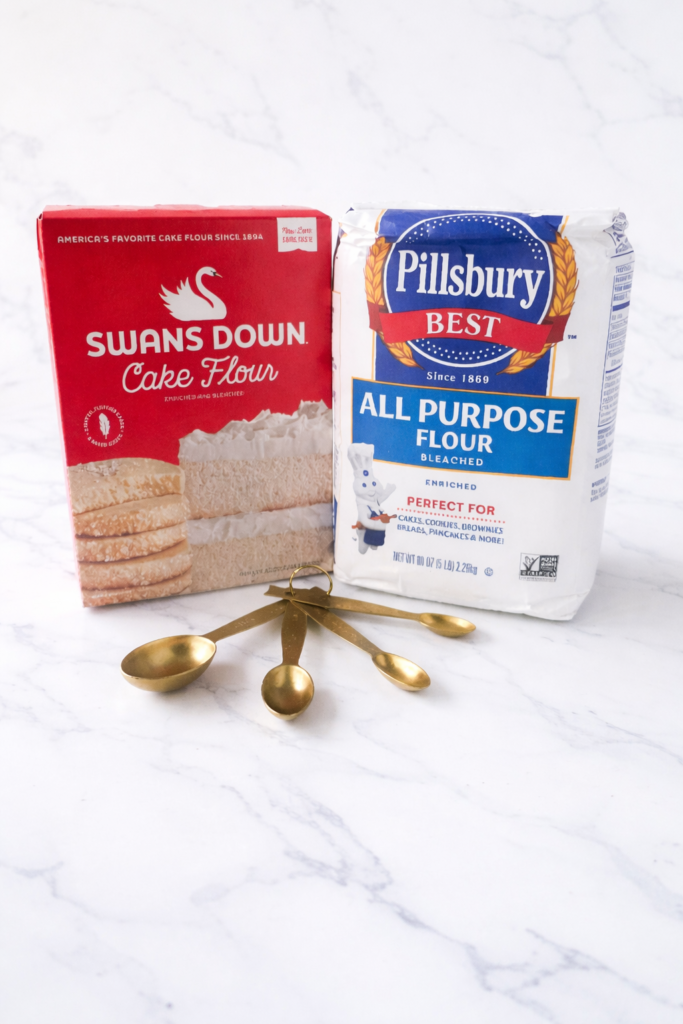
1. It All Starts with Protein
The biggest difference between these two flours is the protein content. When flour meets liquid and heat, protein develops into gluten.
- Gluten provides the “web” or structure that holds air bubbles.
- More Protein = More gluten = Chewier, tougher structure (think bagels).
- Less Protein = Less gluten = Softer, more delicate structure (think birthday cake).
| Feature | Cake Flour | All-Purpose Flour |
| Protein Content | 7% – 9% | 10% – 12% |
| Wheat Type | Soft Wheat | Blend of Hard & Soft Wheat |
| Texture | Fine, silky, powdery | Granular, slightly sandy |
| Color | Bright White (often bleached) | Off-white (creamy) |
| Best For | Sponges, biscuits, pastries | Cookies, bread, muffins, brownies |
2. What is Cake Flour?
Cake flour is milled from soft wheat and ground into an ultra-fine consistency. Most commercial cake flours are bleached, a process that doesn’t just whiten the flour—it actually alters the starches so they can absorb more liquid and fats.
The Result: A fine-grained, moist, and “velvety” crumb that melts in your mouth.
Pro Tip: If you squeeze a handful of cake flour, it will hold its shape. All-purpose flour will usually crumble apart. I love using Swans Down Cake Flour for my family heirloom pound cake recipes!
3. What is All-Purpose Flour?
The “Swiss Army Knife” of the pantry, AP flour is a blend of hard and soft wheat. It is designed to be sturdy enough for crusty bread but light enough for a standard batch of cookies. It is the reliable middle ground. I love using All- Purpose Flour for my Double Chocolate Zucchini Bread!
4. Can You Swap Them?
The short answer: Yes, but with adjustments.
If a recipe calls for Cake Flour (and you only have AP):
You can make a DIY Cake Flour Substitute. Since AP flour has too much protein, you need to “dilute” it with cornstarch to inhibit gluten formation.
- Measure 1 cup of All-Purpose flour.
- Remove 2 tablespoons of the flour.
- Add 2 tablespoons of cornstarch.
- Sift together at least twice to ensure even distribution.
If a recipe calls for All-Purpose (and you only have Cake Flour):
This is trickier. If you use cake flour for chocolate chip cookies, they may turn out pale, fragile, and “cakey” rather than chewy.
- The Fix: Use an extra 2 tablespoons of cake flour per cup to account for the lack of density, and be prepared for a much softer final product.
5. When to Use Which?
- Use Cake Flour for: Angel food cake, pound cake, delicate scones, and silver white cakes.
- Use All-Purpose Flour for: Chocolate chip cookies, pizza dough, pie crusts, muffins, and thickening sauces (roux).
Putting it to the Test: My Go-To Recipes using cake flour & all-purpose flour:
Award – Winning Lemon Pound Cake
Hershey’s Perfectly Chocolate Cake Recipe
Sweet Endings!!
Baking is a science, and flour is your foundation. If you want a tall, sturdy cookie that can stand up to a glass of milk, stick with All-Purpose. But if you’re aiming for a cloud-like layer cake that earns you a “handshake” from the judges, reach for the Cake Flour.
Leave a Reply